Numbers in Urdu are one of the very first things every new learner should master, whether you're planning a trip to Pakistan, connecting with Urdu-speaking family and friends, or simply building a foundation for deeper study. This guide walks you through numbers in Urdu from 1 to 10 — the digits, the script, and the pronunciation — with a couple of habits that make them stick.
Mastering Urdu Numbers: 1 to 10
A Comprehensive Guide for Beginners | LanguagesTutor.org
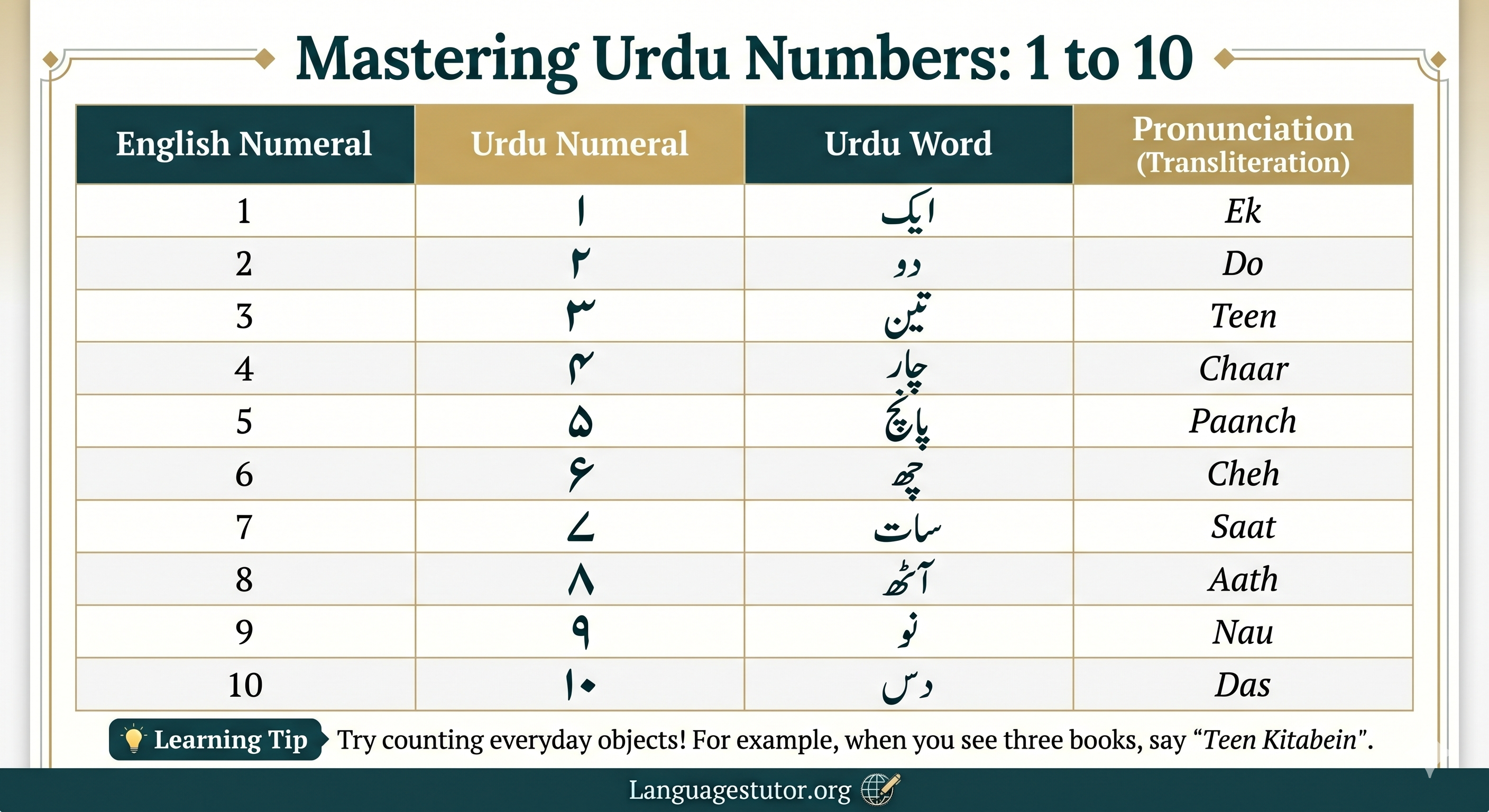
Below is a detailed breakdown of numbers 1 through 10, including their digits, written script, and pronunciation.
Key Observations
You might notice that Urdu numerals (the digits) look quite different from Western Arabic numerals. However, the logic remains the same. Here are a few things to keep in mind:
- Reading Direction: While Urdu text is read from right to left, numbers are actually written and read from left to right, just like in English! For example, "10" is written as "۱" (1) followed by "۰" (0).
- The "2" and "3": Pay close attention to ۲ (2) and ۳ (3). They look similar, but ۳ has an extra "tooth" or curve.
- Pronunciation: Urdu pronunciation is phonetic. "Teen" (3) sounds like the English word for a teenager, and "Do" (2) sounds like the musical note 'Do'.
Learning Tip
Try to practice by counting everyday objects. When you see three apples, say "Teen seb" (Three apples). Incorporating numbers into your daily routine is the fastest way to memorize them!
Where You'll See Numbers in Urdu Every Day
Once you're comfortable with numbers in Urdu, you'll start noticing them everywhere — reading prices at a market, dialing a phone number, telling the time, or following a recipe. Numbers in Urdu keep the same left-to-right pattern inside larger figures too, so a price like ۱۰۰ (100) or a year like ۲۰۲۶ reads in the direction you're already used to. The fastest way to get comfortable is repetition in real context: count your steps out loud, read a phone number one digit at a time, or label a few objects around your home with their Urdu numerals for a week.

Mohsin Ali
Founder of LanguagesTutor
With over a decade of expertise, Languages Tutor provides high-quality, affordable online education in Pashto, Urdu, Arabic, and English. Our certified native teachers deliver personalized, one-on-one classes to students in the USA, UK, Canada, and Australia. We are committed to making language and Islamic courses accessible to learners of all ages, fostering both cultural understanding and personal growth.
You can learn more about me on:

Frequently asked questions


Explore Our Language Learning
Tips, Guides, and Success Stories

Join our newsletter
Get the latest updates, exclusive offers, and more straight to your inbox!
By subscribing you agree to our Privacy Policy and consent to receive updates from LanguagesTutor. Spam-free and un-subscribe anytime.